BLOG | AirCube™
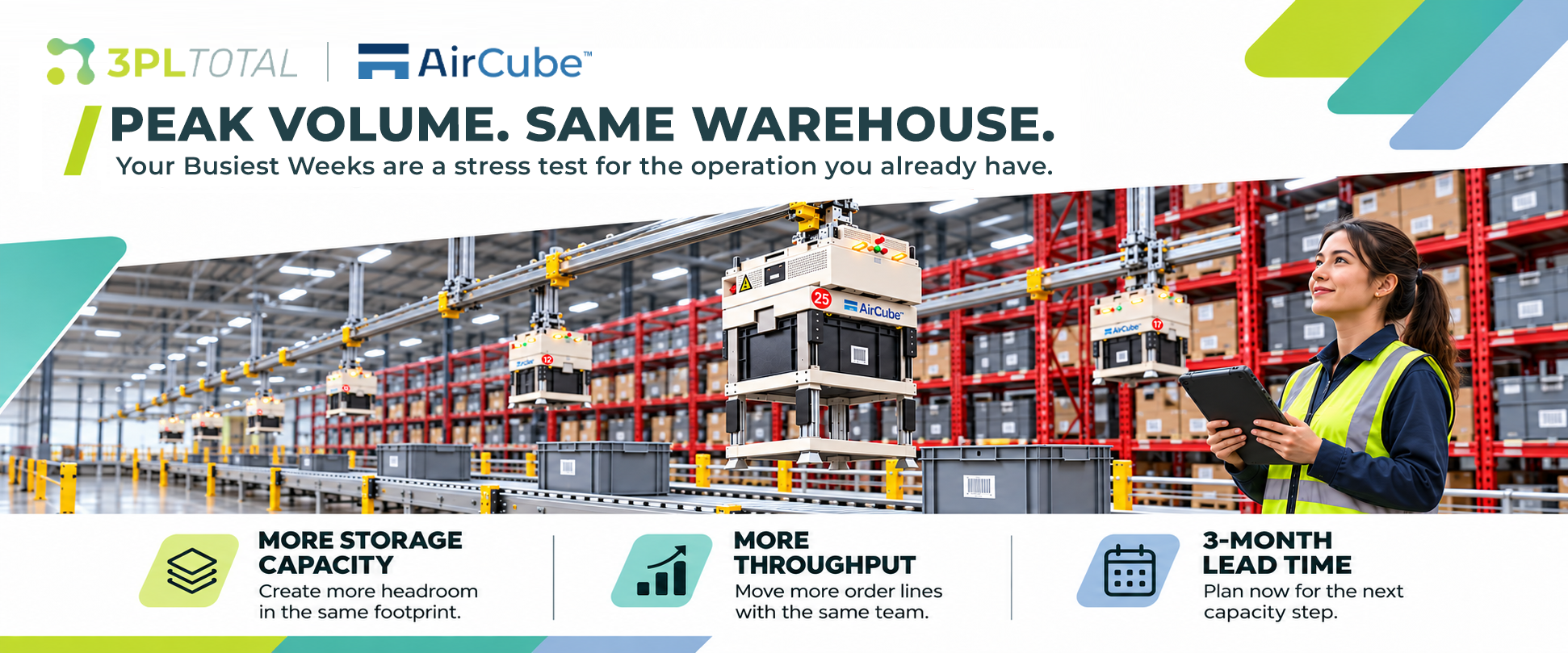
Peak periods have a useful habit: they reveal the real limits of a warehouse operation. The pressure may appear as late orders, overtime, aisle congestion, or a sudden need for temporary labour. But the root cause is often deeper — too much travel, too much waiting, too many manual decisions, and too little headroom in the existing process.
For 3PLs, retailers, and distributors, the question is not only whether the operation can survive the next surge. It is whether the same warehouse can support the next stage of growth without scaling labor and floor space at the same rate.
Peak Pressure Usually Starts with Movement
In a manual picking model, higher order volume often creates more walking, more searching, and more interaction between people in the same aisles. Adding pickers can increase capacity, but it can also add congestion and process variation.
That makes travel a capacity problem, not only a labor problem. If a large share of the shift is spent moving between storage locations, the operation reaches a point where adding more people produces diminishing returns.
Build Fulfillment Headroom Before You Need It
AirCube™ changes the picking model by bringing tote-based inventory to the operator. Goods-to-Person flow reduces dependency on picker travel, while software-directed sequencing and staging help coordinate what should arrive next.
For suitable configurations, this creates a more scalable operating model: compact storage uses the existing footprint more effectively, Goods-to-Person reduces non-value-added movement, and software orchestration helps maintain flow as workload changes.
The value is not simply robot speed. It is the ability to create operational headroom before volume becomes an emergency.
This Year’s Pressure Should Inform Next Year’s Design
Warehouse automation is not an overnight decision. A typical project can require around five months from planning through deployment, depending on scope, integration, and site conditions.
That makes the weeks after a busy operating period valuable. The bottlenecks are visible. Teams know where labour was stretched, where orders waited, and where the layout created friction. Those observations can be turned into a stronger capacity plan for the next demand cycle.
The planning conversation should cover more than hardware: SKU profile, order mix, peak pattern, workstation flow, WMS / ERP interfaces, site constraints, and the commercial case all affect the right configuration.
Plan for Capacity, Not Just The Next Peak
A good automation plan should solve an ongoing operating problem, not only a seasonal one. If the same issues appear every time volume rises, the opportunity is to redesign the flow so the operation becomes easier to scale throughout the year.
3PL-TOTAL starts with the warehouse operation, then connects software, integration, and automation around the real requirement. AirCube™ can be one part of that design where tote-based Goods-to-Person fits the workflow.